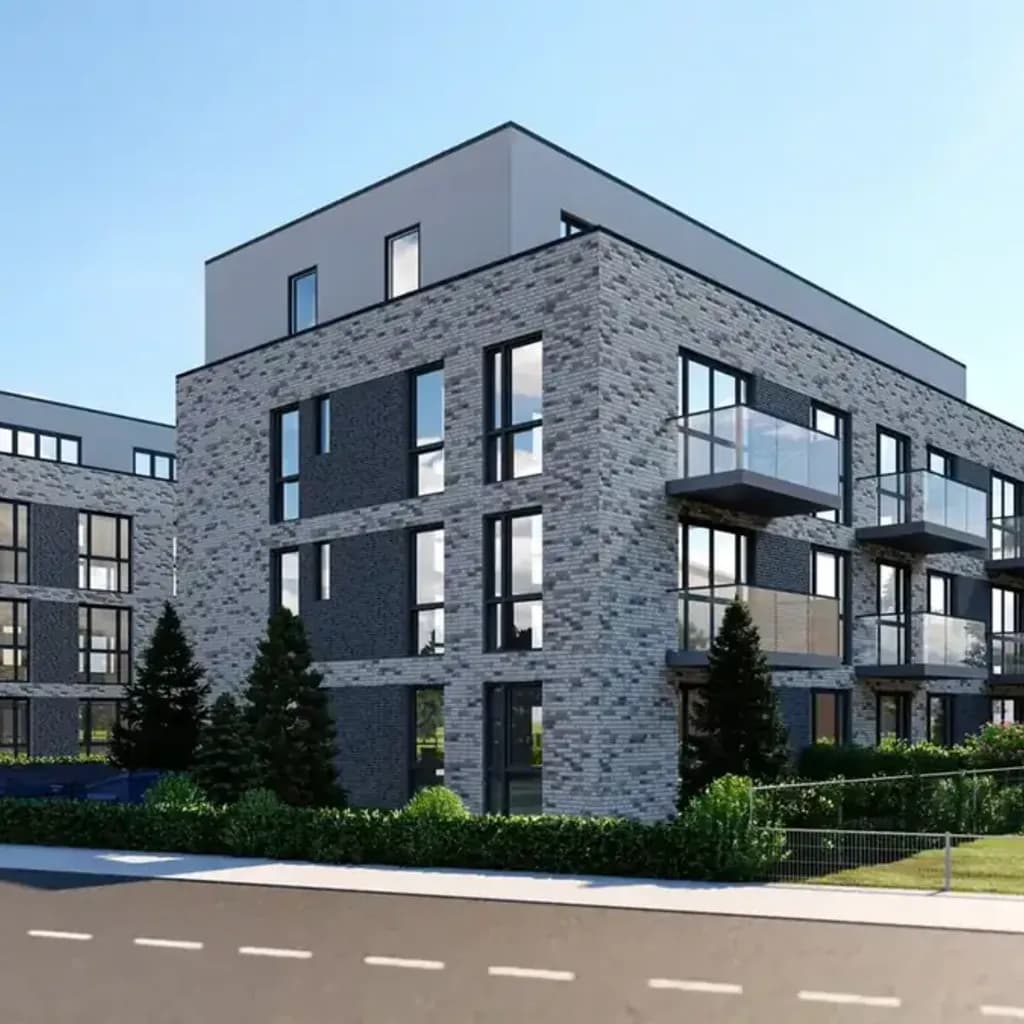
Renderings and the Law: Non-Binding Illustrations, Rights of Use and What Developers Should Know
"Non-binding illustration" is no free pass: what developers should watch for with deviations, rights of use and staffage in renderings.
A great deal has been written about the technical quality of visualisations. Almost nothing about the legal side. Yet it matters to every property developer, project developer and estate agent who shows images of something that does not yet exist. Between the rendering in the brochure and the apartment the buyer eventually accepts on handover lies a gap in expectations. How wide that gap is, is up to you.
A note upfront: This article is not legal advice and is no substitute for it. We are a visualisation studio, not a law firm. What follows is experience drawn from many projects and a general orientation, not a legal opinion on your specific case. For concrete questions about purchase contracts (Kaufvertraege), construction specifications (Baubeschreibungen) or licence agreements, ask a lawyer. That costs less than what it costs later to have skipped it.
The "non-binding illustration" disclaimer and what it does not do
Practically every brochure carries it: "Non-binding illustration. Subject to change." The sentence is standard, sensible and correct. But it is not a free pass.
The idea that a line of small print neutralises every image above it is convenient and risky. An image is a statement. If it shows a fireplace, it says: there is a fireplace here. If the floor plan provides no flue connection and the construction specification mentions none, the image has created an expectation the contract documents do not deliver. Whether a claim arises from that in an individual case is decided neither by a blog post nor by a footnote, but potentially by a court on the specific facts.
The practical point is a different one, and it holds regardless of the legal position: disappointed buyers are expensive. They drag out handover inspections, they stretch out discussions about optional extras, they write reviews. A rendering that promises more than the construction specification buys you attention and pays for it with friction during delivery.
The simple rule: show what the construction specification says
The most usable rule of thumb we know is unspectacular: the rendering and the construction specification should describe the same building.
In concrete terms:
- Building elements such as balconies, loggias, roof terraces, bay windows, dormers and fireplaces appear in the image only if they are in the contract.
- Fixed fittings such as floor coverings, sanitary ware, doors and windows are shown in the specification actually owed, not in the prettiest one available.
- Outdoor areas such as fences, paths, existing trees and parking spaces match the landscaping plan.
- Furniture is decoration, and that is allowed to show. An empty room is hard to sell; showing it furnished is entirely legitimate.
The point of conflict lies in the grey zone in between, and it is called the optional extra (Sonderwunsch). The fitted kitchen, the fireplace-style hearth, the walk-in shower with rain head, parquet instead of vinyl: all of it can be shown, provided it is labelled as such.
A caption such as "Shown with optional extras (kitchen, fireplace, parquet), not included in the purchase price" costs you one line and saves you the argument. It has a second effect too: it is a selling point. The prospective buyer who reads it knows the kitchen is available, and you have opened a conversation about upgrade prices instead of setting up a disappointment.
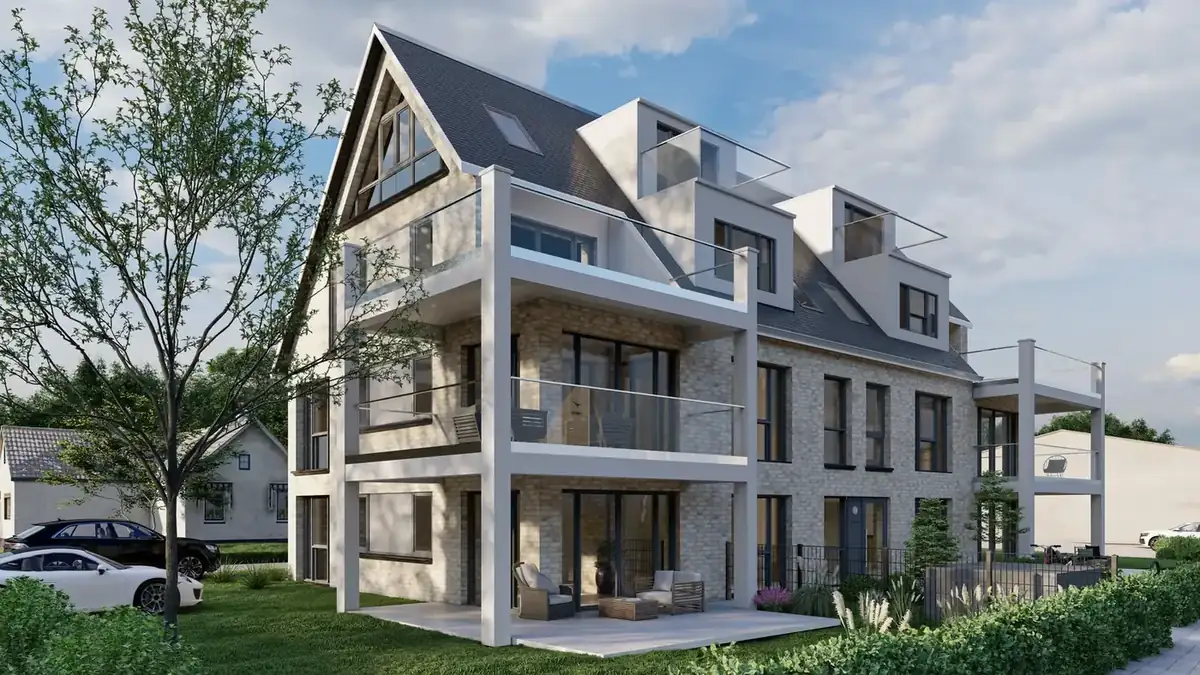
Rights of use: who may use the image, and where?
A rendering is a copyrighted work. Whoever creates it holds rights in it. What you receive as the client is a grant of rights of use (Nutzungsrechte), and their scope follows from what was agreed. If nothing specific was agreed, in a dispute the contract is interpreted by reference to its purpose. That is the moment when you wish you had written three more sentences beforehand.
Clarify before you commission, and do it in writing:
- For which project do the rights apply? Only for this development, or also for the next one using the same house type?
- In which media? Brochure as PDF, property portal, your own website, social media, the site hoarding, a newspaper advertisement, a trade fair stand, a promotional film.
- For how long? Unlimited in time is the norm for project visualisations, but some studios impose a time limit.
- May you edit the image? Cropping, colour, added text, reuse of part of the image.
- May you pass it on? To the sales partner, the estate agent, the buyer, the press.
The last point is the one most often overlooked. If an estate agent puts your rendering into their own portal listing, they are using it. If a local newspaper prints it, it is using it. If your rights do not cover that, you have a problem that often only becomes visible once it turns awkward.
What an unclear arrangement costs is trivial to quantify: you need the image at short notice for a campaign, the studio is unreachable or asks for a top-up fee, and your campaign waits. With us, the rights of use for marketing the project are included in the price; a rendering from EUR 399 comes with the rights you need to market that project. Ask every provider about this before you commission, not afterwards.
The architect's copyright in the design
One point that regularly surprises developers: the architect too may hold copyright in their design, provided it reaches the required level of creative originality (Gestaltungshoehe). Not every terraced house meets that threshold; many designs do not, some do.
For visualisation this means one thing above all: whoever renders a building is reproducing someone else's design. As a rule this is unproblematic, because the visualisation is produced on behalf of and in the interest of the client who commissioned the architect. It can become critical when images are used in a context that departs from the original purpose, for example as a generic advertising motif for an entirely different project.
Sensible and easy to arrange: settle in the architect's contract that visualisations of the design may be produced and used for marketing, and whether and how the architect is credited. Many architects care about the credit, and that is usually one line in the image credits, not a conflict.
People, cars and artwork in the image
Renderings live off their staffage. A square without people looks dead, a street without cars unreal, a wall without a picture bare. Those very elements bring questions with them.
People. Renderings use either 3D figures or cut-out photographs of real people. With the latter, provenance is decisive: does the cutout come from a library that has secured the necessary rights, including the consent of the person depicted? Reputable providers document this. A photo from an image search is not a source. If you want certainty, use 3D figures; they look considerably better today than they did five years ago.
Car brands. A recognisable brand logo on a car in the foreground is rarely a real problem, but it is also rarely necessary. Vehicles can be kept neutral, logos omitted, number plates left blank. That is the better design decision anyway, because a brand always carries a message you may not have intended to send.
Artwork on the wall. The poster above the sofa and the large photograph in the hallway are works with rights of their own. Avoid recognisable, real artworks unless you hold the rights. In practice, abstract surfaces, out-of-focus motifs or purpose-made graphics are the pragmatic solution, and nobody notices them negatively. The same applies by analogy to furniture with highly distinctive design: the design classic in the living room is a popular styling device and rarely the reason anyone buys.
Incidentally: if you furnish existing photos with virtual home staging, the same care applies. And if you work with drone photography, a further field comes into play: flight permission rules, overflight restrictions and the question of what may be recognisable of neighbouring properties in the image. That is why we fly only with the required certifications and, on request, obscure anything identifiable.
A short pre-publication checklist
Before a rendering goes into the brochure, onto the portal or onto the site hoarding:
- Does the image show only building elements that are owed under the contract?
- Are optional extras identified in the caption?
- Is the non-binding illustration disclaimer visible, not tucked away in the legal notice?
- Do your rights of use cover all planned channels, including passing the image to agents and the press?
- Has the architect's credit been settled?
- Are the people, brands and artwork in the image unproblematic?
- Does the image match the other documents, that is the floor plan, elevations and construction specification?
Seven questions, ten minutes. The cheapest part of the entire project.
Conclusion
The legal side of visualisation is not an exotic side issue but part of preparing the sales process. The non-binding illustration disclaimer belongs there, but it is no substitute for honesty in the image itself. Rights of use are settled beforehand, not once the campaign is running. And staffage is chosen so that it raises no questions nobody needed to ask.
And once more, explicitly: this is a practical orientation from a studio's perspective, not legal advice. For anything that goes into a contract or a construction specification, a lawyer belongs at the table.
For more on the craft side, see our guide to property visualisation. And if you want to see what an honest, contract-accurate rendering of your project looks like, we will produce a free sample rendering from your planning documents.
Related articles
Explore Property rendering
See what the service includes, which source material is useful and how a typical project starts.