Property video from existing photos: when the short film pays off
Portals and social media favour moving image – but a film crew rarely pays off for a condominium. The short film from existing photos closes that gap.
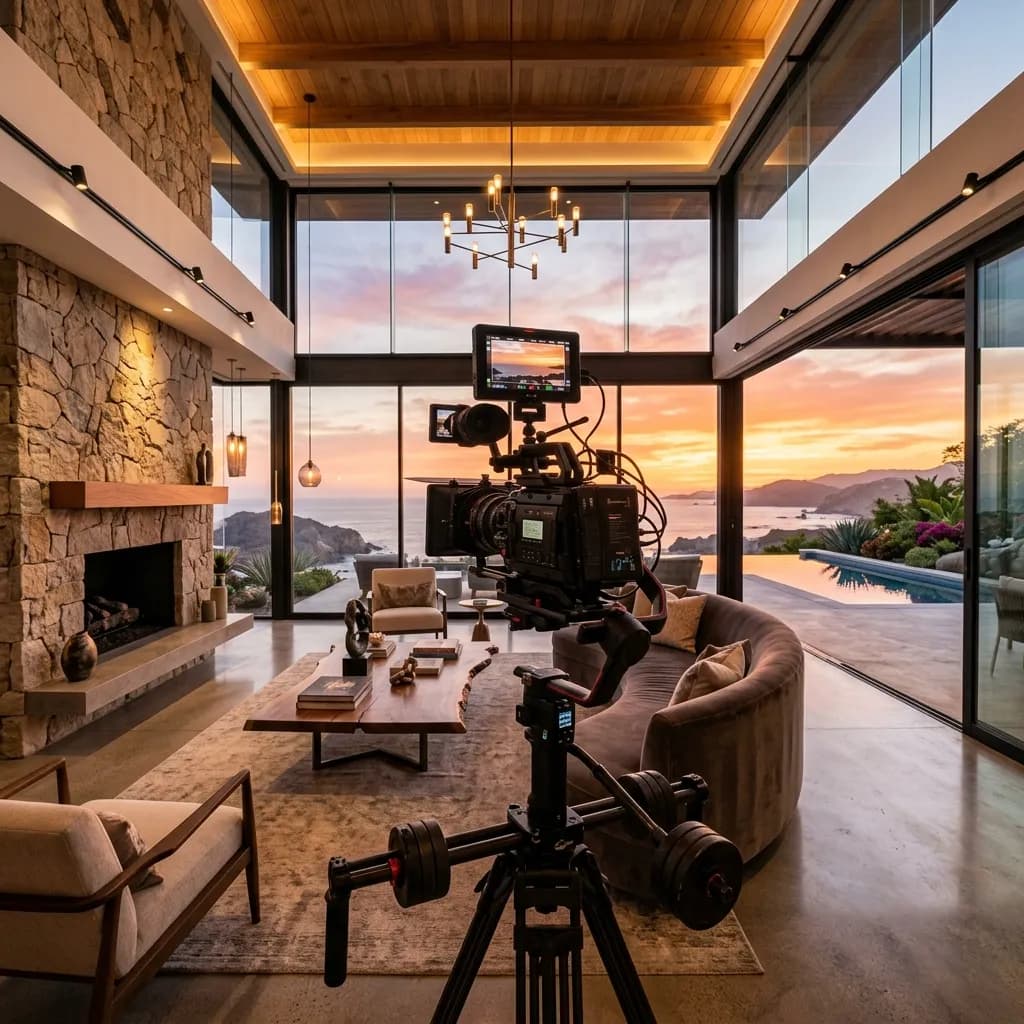
Moving image is no longer optional in property marketing. Portals favour listings with video, Instagram and TikTok distribute reels far more widely than static images, and prospects stay with a property measurably longer when there is a film. At the same time every agent faces the same calculation: a full video production with a crew, gimbal and drone does not pay off for an average condominium.
This is exactly the gap the short film from existing photos targets. It uses the image material produced for the listing anyway and turns it into an edited, scored film. This article covers when that works, when it does not, and what to watch for in the source material.
What happens technically: the Ken Burns effect
The difference between a slideshow and a film lies in camera movement. Each photo is slowly zoomed in, pulled out or panned sideways – a technique named after the documentary filmmaker Ken Burns. This creates the impression of a camera move even though the basis is a still image.
What matters is that the direction of movement is not set at random but follows the visual flow of the image: from the entrance into the depth of the room, from a detail out to the overall view. Combined with soft dissolves and cuts timed to the music, a flow emerges that feels like filmed footage. Where this care is missing, the result looks restless – the most common reason home-made videos look cheap.
How many images you need
Between ten and 25 shots is ideal. That allows a film of 30 to 60 seconds without individual motifs lingering too long. With fewer images the film simply becomes shorter – no problem, as long as the narrative works.
More important than quantity is selection. A compact film with 15 strong motifs looks considerably better than one with 30 average ones. Redundant shots of the same room from almost identical angles do more harm than good.
Resolution is the limiting factor
This is where most attempts fail. Because the images are zoomed into, low resolution directly affects sharpness. What looks acceptable as a listing thumbnail becomes visibly soft in the film.
As a rule of thumb: photos should be at least Full HD resolution, preferably considerably higher. Images from current smartphones generally work well. Problematic are pictures already compressed for a portal – never download these back from your own listing; always use the original files.
Narrative: the order decides
A film is more than the sum of its images. A proven structure follows the natural course of a viewing: first the exterior and the location, then the entrance area, then the living spaces in logical sequence, then kitchen and bathroom, and finally balcony, garden or view.
This order matches how prospects mentally explore a property. It prevents the typical break where the facade suddenly reappears after the bedroom – a mistake that occurs regularly in self-made videos and subconsciously irritates the viewer.
Property data belongs on screen
A property video should not merely look good, it should sell. Display the hard facts directly in the image: living space, room count, year of construction, energy rating and asking price as clean text elements at the right moment. That way the viewer retains not just a sense of the space but the decisive figure.
The same principle applies to locational advantages: distances to school, station or town centre as on-screen text are often the decisive information for families – and otherwise appear only as running text in the brochure that few people read.
Two formats are mandatory
A film that works on a portal is unusable in an Instagram feed. You need two versions:
- 16:9 horizontal for portals, website and digital brochures
- 9:16 vertical, condensed to 15 to 30 seconds, for reels, stories and shorts
The vertical version is not a cropped copy. The framing has to be reset so the essential content also works in portrait. Anyone simply cropping the landscape version regularly loses precisely the part of the image that matters.
Music: the underestimated legal trap
Background music determines the effect – and the legal risk. You may not use music from streaming services or downloaded from video platforms. On social media that leads at best to muting; on your own website at worst to a cease-and-desist letter.
Use exclusively licensed music whose rights cover website, portals and social media. Reputable providers supply the licence confirmation; keep it.
When a real shoot is worth it instead
The short film from images has a clear limit. As soon as new-build projects, commercial property or your corporate presentation are involved, there is no way around a proper video production. That involves real camera moves, drone flights and, on request, interviews – elements that cannot be generated from still images.
The rule of thumb: if the aim is to give a single existing property moving image quickly and affordably, the short film from photos is the right choice. If the aim is to stage a project or a brand, you need a shoot.
Optimising beforehand pays off
The film is only ever as good as its source material. If the photos are unedited, image editing should first correct exposure, colour cast and converging lines. If the property is empty, virtual home staging is worthwhile before the film is created.
That turns a set of plain raw shots into a complete marketing package of optimised images and moving film – without the property having to be entered a second time.
What property data to supply
So the on-screen text is correct, we need the key data in an unambiguous form: living space and plot size, room count, year of construction, energy rating with certificate type, purchase price or net rent, and the location designation. Consistency with the listing matters – differing figures between video and advertisement are noticed and undermine the credibility of both. Also supply your logo as a vector file or in high resolution, plus your corporate colour values, so the outro matches the rest of your presence.
How long the film should be
For portals and your own website, 45 to 90 seconds works best. Shorter feels rushed; longer and viewers drop off before the contact details appear. Social media follows different rules: there the first three seconds decide whether viewing continues, and the sensible length is 15 to 30 seconds. That is not a shortened version of the long film but its own narrative – it opens with the strongest motif instead of the facade and dispenses with the slow build-up.
Common mistakes in self-made videos
Anyone attempting it themselves usually stumbles over the same points. The directions of movement change at random, making the film restless. The transitions are too fast for the time a photo needs to be absorbed. The music bears no relation to the edit, so image changes fall against the beat. And the images appear in the order they sat in the camera rather than in a comprehensible sequence. Each point is individually inconspicuous; together they produce the impression clients describe as cheap without being able to name the cause.
The film as part of a series
For agencies the format develops its effect through repetition. When every property gets the same structure, the same typography and the same outro, a recognition value emerges that works beyond the individual property. After a few months prospects recognise whose video they are watching before the logo appears. That effect is not achieved with one elaborate film but with a reliable template refilled for each property – and that is precisely what makes the short film from images economically suitable.
Related articles
Explore Cinematic property videos
See what the service includes, which source material is useful and how a typical project starts.