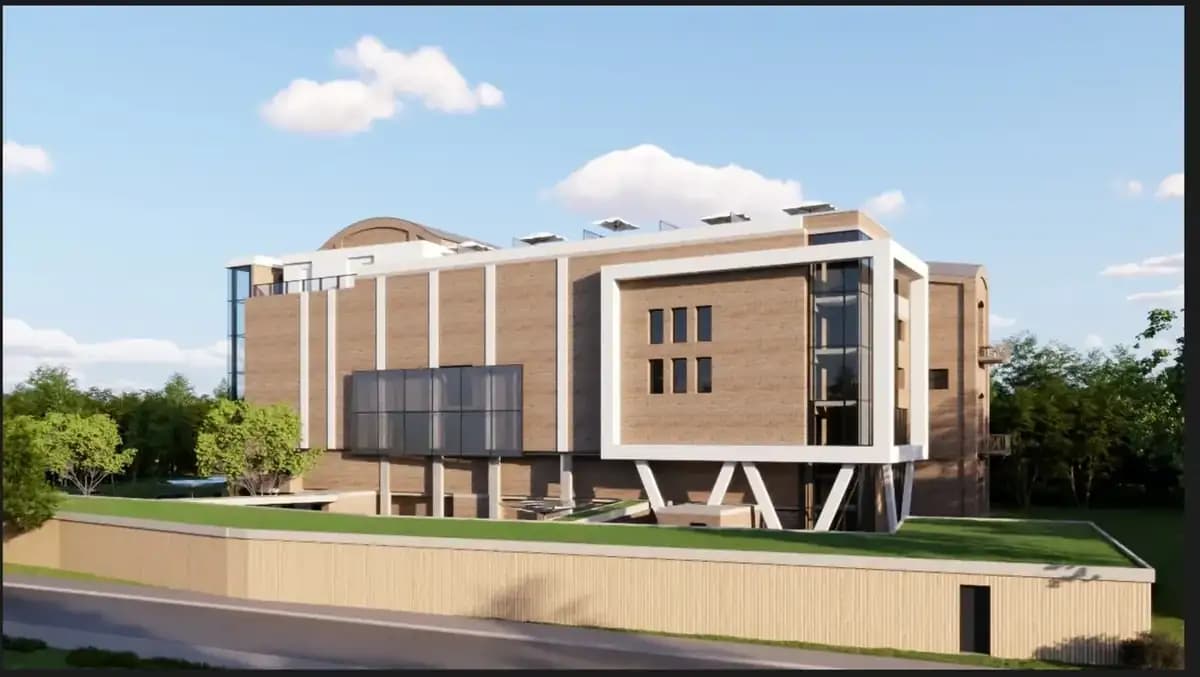
Choosing a Real Estate Rendering Provider: Comparing Quotes, Judging Quality, Avoiding Traps
How to assess a real estate rendering provider systematically: read the portfolio properly, make quotes comparable, avoid contractual traps. With a 12-point checklist and red flags.
At first glance, selecting a provider for real estate rendering looks like a question of price. Three quotes are on the table, one is the cheapest, decision made. In practice, that is exactly the mistake that costs projects weeks – and ends with a second commission placed with a different studio.
Because renderings are not an interchangeable commodity. Two quotes for "five exterior visualisations" can differ so much in modelling depth, revision rounds, resolution, usage rights and response time that they effectively describe two different services. Treat them as comparable and you are comparing apples with oranges – then wonder about the change orders later.
This article shows how you, as a developer, project manager or estate agent, can assess a real estate rendering provider systematically: which criteria really matter, which questions a quote has to answer, how to spot quality in a portfolio, which contractual traps exist and what a professional workflow looks like. At the end you will find a compact checklist.
First: What do you actually need?
Before you approach the first studio, clarify your own requirements. That sounds trivial, but it is the most common reason for useless quotes: an imprecise enquiry produces imprecise prices.
Answer four questions internally:
- What are the images for? Planning permission procedures and public information require a true-to-location context. Sales needs emotion, light and atmosphere. An internal feasibility check needs neither.
- How many viewpoints across the entire sales period? Brochure (Exposé), property portal, website, site hoarding, print ad, sales folder. Collect the full requirement once instead of reordering three times.
- Which output formats? A site hoarding banner needs a different resolution than a portal upload. Print and large format belong in the enquiry, not in a later change order.
- Which documents are available? CAD, BIM, dimensioned PDF plans or just a sketch? This is by far the biggest price lever – details in our article on the documents needed for rendering.
Put these four points into your enquiry and you will receive quotes that are genuinely comparable. Write "What does a rendering cost?" and you will receive a number that means nothing.
Criterion 1: Specialisation in real estate, not just in 3D
There are plenty of good 3D artists. There are far fewer who understand new-build sales.
A 3D visualisation agency that renders products, machinery and furniture can work in a technically clean way and still miss the point. Property visualisation has its own rules: the camera angle has to make the apartment look larger without lying. The lighting has to hit the time of day when the façade looks its best. The furnishing has to match the target group – a family apartment is staged differently from an investor's buy-to-let flat. And the visual language has to work on portals, where the first image decides whether someone clicks.
So check specifically: does the portfolio show residential and commercial properties on the scale of your project? A provider who has only ever rendered detached houses is a gamble for a neighbourhood scheme with five building volumes and an underground car park ramp.
Also ask whether the provider covers the adjacent services – virtual home staging, 2D/3D floor plans, virtual tours. Splitting services across several suppliers creates coordination overhead and visually inconsistent sales material. A uniform look across brochure, floor plan and visualisation comes across as more professional than three styles from three sources.
Criterion 2: Reading the portfolio properly
Every provider shows their best images. Your job is to look behind the glossy selection. Watch for five technical features that make quality objectively measurable:
- Materials: Does the render have texture? Does timber have a grain that does not repeat every 30 centimetres? Does metal look like metal or like grey plastic? Visibly repeating or distorted textures are the most common quality problem – in every price bracket.
- Light and shadow: Soft, physically plausible shadows, indirect light, reflections in glazing. Flat, hard light without depth is the sure sign of an image that was rushed through the renderer.
- Geometry: Are window reveals, parapets, railings and roof edges built cleanly? Are proportions and component thicknesses right? Anyone sloppy here has not read your plan either.
- Surroundings: Does the vegetation look real, or is it the same row of trees as in every other reference? Does the streetscape fit the location?
- Deliberate irregularities: A slightly creased cushion, a reflection in the floor, a leaf on the path. Perfectly tidy images look dead; realism comes from controlled imperfection.
It is also worth checking consistency: are all the references equally strong, or are there three showcase images and mediocrity behind them? Where quality fluctuates, there is a high chance your project will go to a junior or to a rotating cast of freelancers.
The most honest test, however, is a different one: ask for a sample rendering of your own property. A portfolio shows what the provider can do. A sample shows what they can do with your documents. At FotoEstate a free sample rendering up front is possible – for exactly that reason.
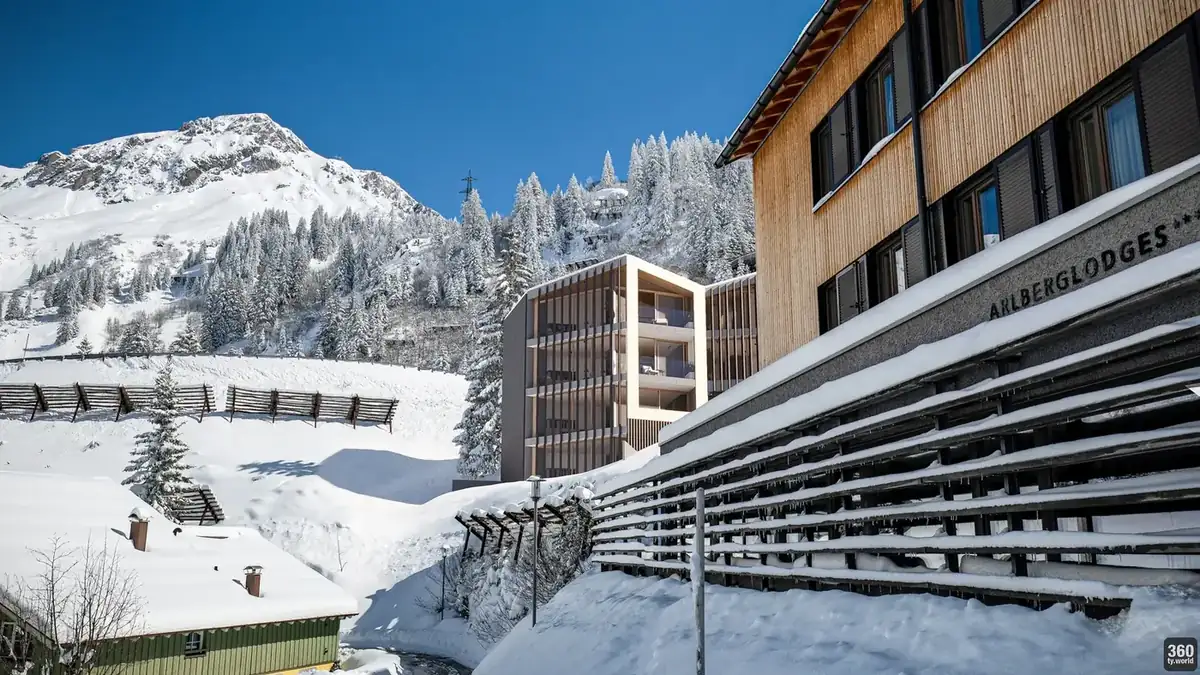
Criterion 3: What a solid rendering quote has to contain
A quote consisting of one line and a total is not a quote, it is a price tag. If you want to compare rendering quotes, every item has to answer the same questions:
- Scope of work: How many images, which subjects, which viewpoints? Is the number of images fixed or "approx."?
- Resolution and format: Which pixel dimensions, which file format? Is the resolution sufficient for print and large format?
- Revision rounds: How many are included? What does each additional one cost? From which project stage do changes count as a new commission?
- Usage rights: Unrestricted in time, territory and media? For all channels including print and social media? Also for your sales partners and agents?
- Deadlines: A specific delivery date, or a range with a starting condition ("X working days after receipt of documents")?
- Data basis: Which documents does the provider expect, and what happens if they are incomplete?
- What is not included? People, vehicles, night mood, true-to-location neighbouring buildings, furnishing, moving image.
If one of these points is missing, ask in writing. The answer is a test result in itself: a provider who answers a precise question precisely and quickly will work the same way during the project. Anyone who dodges now will dodge later too.
On pricing: at FotoEstate an exterior or interior visualisation starts at EUR 399 per image, virtual home staging costs EUR 59 per image, 2D and 3D floor plans EUR 19, a Matterport tour EUR 199. What drives these figures in detail, and why the first image of a project is always the most expensive, is covered in our article on real estate rendering costs.
Criterion 4: Putting the price in context
The cheapest provider rarely wins. Not because expensive automatically means good, but because a strikingly low price is almost always compensated for somewhere – and you only find out where afterwards.
Typical savings points in dumping offers:
- Modelling: The building is built in simplified form. Details that are in the plan are missing from the image.
- Render time: Images are calculated with a low sample count. The result: image noise, mushy shadows, blotchy surfaces.
- Post-production: Does not happen. The raw render goes straight to the client.
- Revisions: Not included and billed individually. EUR 149 per image becomes EUR 500 after three rounds.
- Communication: Runs asynchronously across several time zones. One query turns into a lost day.
Instead, measure it against the construction budget. A package of five high-quality visualisations for an apartment building sits in the low four-figure range – a fraction of a percent of the investment sum. The leverage is not in saving EUR 200 per image, but in a sales launch that happens weeks earlier and reduces the pre-financing burden.
A second point: check the pricing logic. A reputable provider charges more for the first image of a project than for the following ones, because the model is only built once. Anyone charging a flat identical price per image either has a very crude costing model – or is not really building the images from one model.
Criterion 5: Workflow, communication and reliability on deadlines
A rendering project rarely fails because of the software. It fails because of coordination.
Ask every architectural visualisation studio about their process. A solid workflow looks roughly like this:
1. Briefing and review of documents: The provider reviews the plans, names gaps and raises queries before starting. Anyone who starts immediately without a single question has either understood everything – or read nothing.
2. Camera alignment: Viewpoints are agreed in advance, often as simple screenshots from the model.
3. Greyscale raw render (clay render): You see geometry, massing and camera without materials and lighting. This is where you correct components and angles – at this stage a change costs almost nothing.
4. Materials and lighting: Only after the geometry has been approved.
5. Final render and post-production.
6. Revision rounds and sign-off.
7. Delivery in all agreed formats and resolutions.
This intermediate step with the raw render is the single most important quality feature in the process – it prevents exactly those expensive late corrections that make projects escalate. If it is missing from the quote, ask about it.
On deadlines: ask for time frames, not feelings. Realistically, a standard exterior visualisation takes a few working days, complex projects with several viewpoints considerably longer. How that duration is made up in detail and where the typical delays arise is described in our article on the duration of a real estate rendering.
A practical test before you commission: how quickly and how precisely does the provider respond to your request for a quote? Response time during acquisition is the best response time you will ever get. If it is already three days at this stage, it will not improve during the project.
Criterion 6: Spotting contractual traps
Most conflicts arise not from image quality, but from the terms behind it. These points belong in writing:
Usage rights
The single most important point. By default the copyright remains with the creator; you acquire usage rights. Their scope has to be stated in the quote. Clarify:
- Are the rights unrestricted in time, territory and content?
- Do they apply to all channels – website, portals, print, site hoarding, social media, trade fair stand?
- May sales partners and agents use the images? In developer projects, sales often runs through third parties. Without that permission, every brochure produced by a partner agent is formally an infringement.
- Do the rights only transfer upon full payment? That is customary and fine – you just need to know before you publish ahead of payment being received.
- Who is responsible for third-party assets (furniture models, textures, cut-out people)? The provider has to warrant that they hold the rights to them.
Raw data and handover of the model
As a rule, the 3D scene belongs to the studio, not to you. That is standard in the industry. It becomes critical if you want to switch providers: without the model, the successor starts from scratch and you pay for the modelling a second time. Clarify in advance whether and on what terms you can obtain the scene – and how long it is archived at all. A provider who deletes project data after four weeks makes every reorder expensive.
Discrepancies between image and completed building
Renderings are advertising with legal consequences. If the finished building visibly deviates from the image, that can have consequences under the purchase contract. This is why notes such as "non-binding illustration, furnishing not included in the purchase price" belong in the sales material – and the question of who supplies and takes responsibility for that labelling belongs in the coordination. We covered this in detail in our article on law, copyright and deviations in rendering.
Payment terms and change orders
Deposits are customary. Make sure the balance only falls due after acceptance, and that change orders – additional images, plan changes by the architect, further revision rounds – are covered in the quote with an hourly rate or a per-image price. A provider without a defined change-order logic will define it themselves when a conflict arises.
Red flags: When to keep looking
Take these signals seriously. Individually they are not always a knock-out criterion – in combination they are:
- No portfolio with real projects, only stock images or AI-generated examples.
- References without context: no project names, no developers, no contacts, no reviews.
- A price without a description of services. "Renderings from EUR 79" is an advertising claim, not a quote.
- No information on revision rounds – or "unlimited revisions", which in practice is never true and usually ends in a refusal of goodwill.
- No queries about your documents. A professional always has questions.
- No intermediate step in the process. Anyone who only shows the first image at the very end shifts the entire risk onto you.
- Vague usage rights or wording such as "use for marketing permitted" without further detail.
- Communication only via chat, no named contact, no phone number.
- Extremely short delivery promises for complex projects. 48 hours for a true-to-location neighbourhood visualisation is physically impossible – something is being left out.
- Pure AI pipelines sold as "photorealistic rendering". The difference is real and relevant; where AI makes sense and where it does not is explained in our article on AI rendering vs. professional visualisation.
Checklist: Assessing a provider in 12 points
Work through this list for every candidate. Anyone who fails on more than two points is out.
1. Does the portfolio show property projects on your scale?
2. Is the quality consistent across all references?
3. Is there a sample rendering of your own property?
4. Does the quote state the number of images, subjects and viewpoints specifically?
5. Are resolution and output formats defined – including print?
6. Is the number of revision rounds stated, including the price for further ones?
7. Are the usage rights unrestricted and do they cover sales partners?
8. Is there a defined workflow with an interim approval (raw render)?
9. Are questions asked about your documents?
10. Is there a specific delivery date with a clear starting condition?
11. Is it clear how long project data is archived?
12. Does the provider respond quickly, precisely and with a named contact person?
Questions to ask in the first conversation
A 20-minute conversation reliably separates the professionals from the price lists:
- Who exactly will work on my project – a permanent team or rotating freelancers?
- How many projects are running in parallel at your studio?
- Which software do you use, and why?
- What happens if the architect changes the plan mid-process?
- How do you deal with contradictory feedback from my team?
- Can you show me a project that went wrong – and what you changed as a result?
The last question is the most revealing. Anyone claiming that nothing has ever gone wrong has either done very few projects or is not telling you the truth.
Conclusion: Create comparability, then decide
Choosing a real estate rendering provider is not a pricing decision, it is a risk decision. You are not buying images, you are buying planning certainty for your sales launch.
The route there is unspectacular but effective: define your requirements fully before you enquire. Request quotes with an identical scope of work so that they become comparable. Read the portfolio technically rather than emotionally. Ask for a sample of your own property. And settle usage rights, revision rounds and archiving in writing before the first invoice arrives.
Do it this way and you will rarely pay more – but you will far more often get the image that sells the apartment. Everything else on scope, viewpoints and workflow can be found on our page about real estate rendering.
Let's talk about your project
Are you about to choose a provider and want to know what a solid quote looks like? Book a free initial consultation. We will go through your documents, name the gaps, give you a realistic time frame and a quote that discloses every item – number of images, resolution, revision rounds, usage rights.
Simply send us your plans via the enquiry form. On request you will receive a free sample rendering of your own property in advance, so you can judge the quality before you decide. Renderings start at EUR 399 per image – what your project costs specifically is something we will tell you after a look at your documents.
Related articles
Explore Property rendering
See what the service includes, which source material is useful and how a typical project starts.