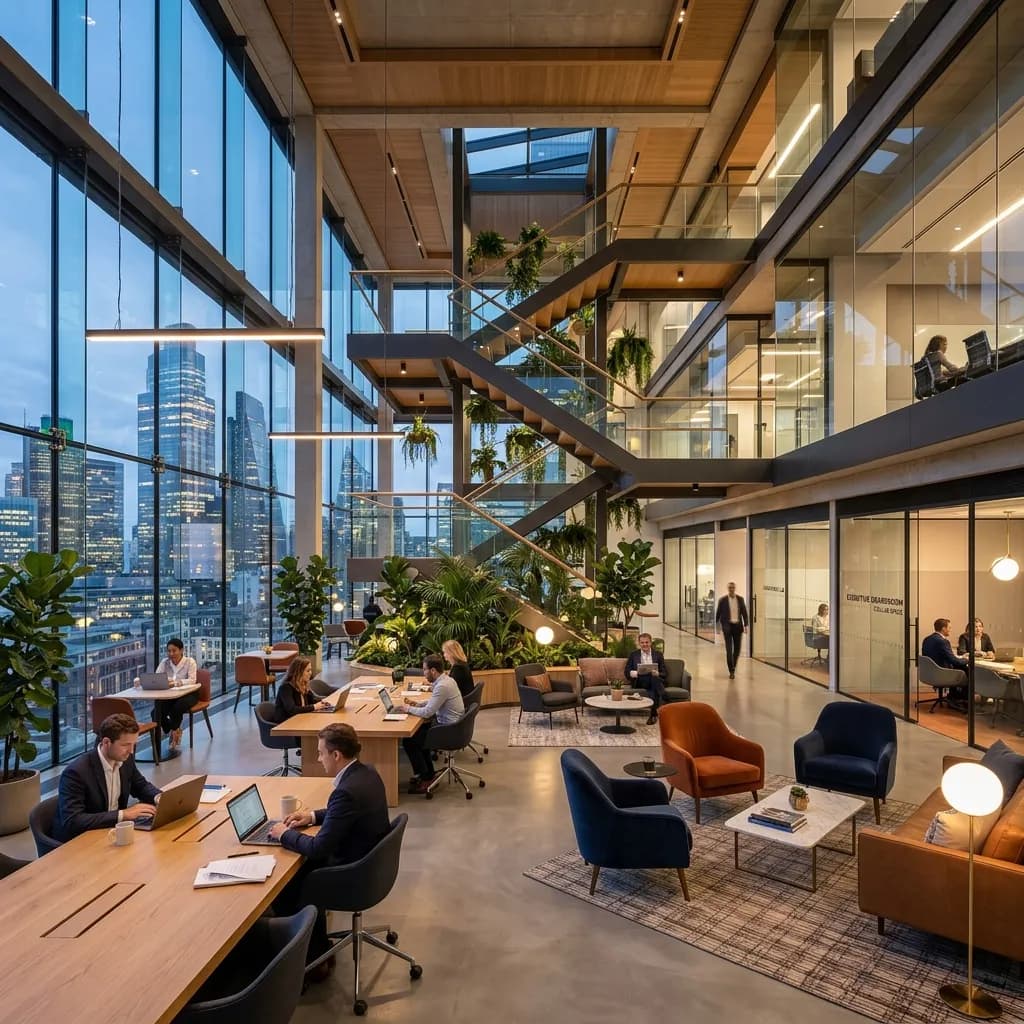
Architectural Photography for Co-Working Spaces: Maximizing Utilization
How to visually optimally market flexible office spaces and modern work environments and increase your occupancy rate.
The market for flexible office spaces (flex offices, business centers, and co-working spaces) is experiencing explosive growth. In metropolises such as Berlin, Munich, or Hamburg, the supply is enormous, and the competition among operators is correspondingly tough. Start-ups, freelancers, but increasingly also established corporates, no longer look today merely for a functional desk with Wi-Fi access. They are looking for a representative ecosystem that promotes productivity, attracts talent (employer branding), and conveys a strong sense of community. In this highly competitive B2B market, visual marketing is the decisive lever for generating leads and motivating prospects to take an on-site tour. Professional architectural photography is not merely a cost factor, but the most effective tool for sustainably maximizing your occupancy rate.
1. Visual identity as the strongest competitive advantage
A co-working space primarily sells an atmosphere and a promise of business success. When an office manager or CEO is looking for new premises for their team and visits your website or a flex-office portal, the decision to request a tour is made within the first three seconds. Blurry, poorly lit smartphone photos or perspective-distorted shots from wide-angle lenses subconsciously suggest a lack of quality in terms of the space's service as well (e.g., slow internet or unclean kitchens).
High-quality architectural photography by FotoEstate, on the other hand, conveys exclusivity, spaciousness, and professionalism. We translate your architectural concept, your design language, and your understanding of community into expressive images that build trust and demonstrably increase the conversion rate of your landing pages.
2. The strategically most important image motifs for your space
The visual marketing of a co-working space requires a deep understanding of the different revenue drivers within your business model. Each area must be specifically staged for its particular target audience:
A. Private Offices: The Cashcow of the Spaces
Private, lockable offices are the most important and stable source of income for most operators. These rooms are often functional and smaller in size. The photographic challenge is to avoid making them feel cramped. By using professional tilt-shift lenses (to prevent converging lines) and a sophisticated HDR exposure technique (High Dynamic Range), which perfectly balances the view through the window (the scenery) with the well-lit interior, we make even compact 4-person offices appear bright, spacious, and high-quality.
B. Open-Space & Flex Desks: Dynamics and Architectural Expansiveness
The open-space area is the visual showcase of your space. Here, the expanse of the architecture (which, in renovations, ideally is based on precise 3D-laser scanning), the industrial design (e.g., exposed ventilation pipes on the ceiling), or the modern furniture must be the focus. We pay attention to exact symmetry and clear lines of sight. Slight blurring of working people in the background can be included to show the dynamics and life in the space without causing data protection issues (GDPR).
C. Conference and Meeting Rooms: Focus on Representativeness
Meeting rooms are often booked by external companies by the hour and are an excellent tool for acquiring new customers. Here, the technical equipment (video conferencing systems, huge screens) must shine just as much as the furniture. We eliminate disturbing reflections on glass walls and screens with circular polarizing filters and ensure a brilliant, glare-free display of the presentation surfaces.
D. Social Areas & Kitchens: The Heart of the Community
The community kitchen, lounge areas, or the rooftop terrace are the emotional selling points. This is where networking takes place. The images of these zones must convey warmth, coziness, and a design affinity. Targeted digital staging (e.g., a arranged coffee, open magazines) or a warm lighting atmosphere (e.g., by selectively turning on design lamps) convey the feeling of an urban café directly into the office.
3. Technical Perfection: HDR, Lighting, and Post-Production
Co-working spaces present photographers with immense technical challenges. On one hand, there are large windows with harsh daylight, on the other hand, deep areas of the room are only illuminated with artificial, often mixed light (warm incandescent bulbs, cold LED light) (mixed light situation).
The FotoEstate team masters these challenges through multiple exposure bracketing and the targeted use of off-camera studio flashes. In the elaborate post-production (image editing), these exposures are manually layered on top of each other. This ensures that the blue sky outside the window is as perfectly exposed as the desk located deep in the room. Colors are calibrated according to standard, so that your branded furniture and corporate colors match reality exactly.
4. ROI: Higher Margins Through Premium Perception
Investing in top-notch architectural photography pays off directly. Photos from FotoEstate not only enhance your Google My Business profile, your social media channels (LinkedIn, Instagram), and your own landing pages. Above all, they are the decisive factor on brokerage platforms that positions your space, in direct comparison with the competitor in the neighboring building, as the higher-quality, more attractive alternative. This premium perception allows you to enforce higher desk rates, nip discount discussions in the bud, and fill your spaces faster.
Conclusion: Make your space a coveted brand
A co-working space is more than just a collection of desks – it is the physical place where the future of work takes place. Do not compromise on the visual presentation of your most valuable asset. With specialized architectural photography from FotoEstate, you can transform your office spaces into a desirable brand, increase the number of tour bookings, and sustainably maximize the occupancy and profitability of your location. Experience the difference that perfect images make for your B2B sales.
Related articles
Explore Virtual office staging
See what the service includes, which source material is useful and how a typical project starts.