The 5 most common mistakes in cinematic real estate videos and how to avoid them
How to achieve maximum results with cinematic real estate videos and save valuable budget.
Cinematic real estate videos are the undisputed pinnacle in modern real estate marketing. In the luxury segment and for large-scale new construction projects, buyers no longer expect static photo galleries, but Hollywood-style film productions that convey a sense of lifestyle.
But this is exactly where the trap lies for many brokers and developers: Anyone who presents an exclusive 3-million-euro villa with a video that appears unprofessional massively devalues the property. The shot backfires, the brand suffers, and the video becomes a conversion killer. We reveal the 5 most fatal mistakes in the production of cinematic real estate videos and show how B2B clients can significantly shorten the sales cycle through the highest production standards.
Error 1: The Smartphone Gimbal Fallacy (Micro-Jitters)
Many real estate professionals believe that buying a 150-euro smartphone gimbal automatically makes them a cameraman.
Why this fails:
Even though a gimbal compensates for large shakes, a smartphone lacks physical mass. When walking through rooms, the rhythm of your steps transfers as an unpleasant wobble (the Z-axis) to the image. In addition, the tiny smartphone sensors struggle with strong image noise and 'jello effects' (distortions during quick pans) in low light (in hallways or windowless bathrooms).
The professional solution:
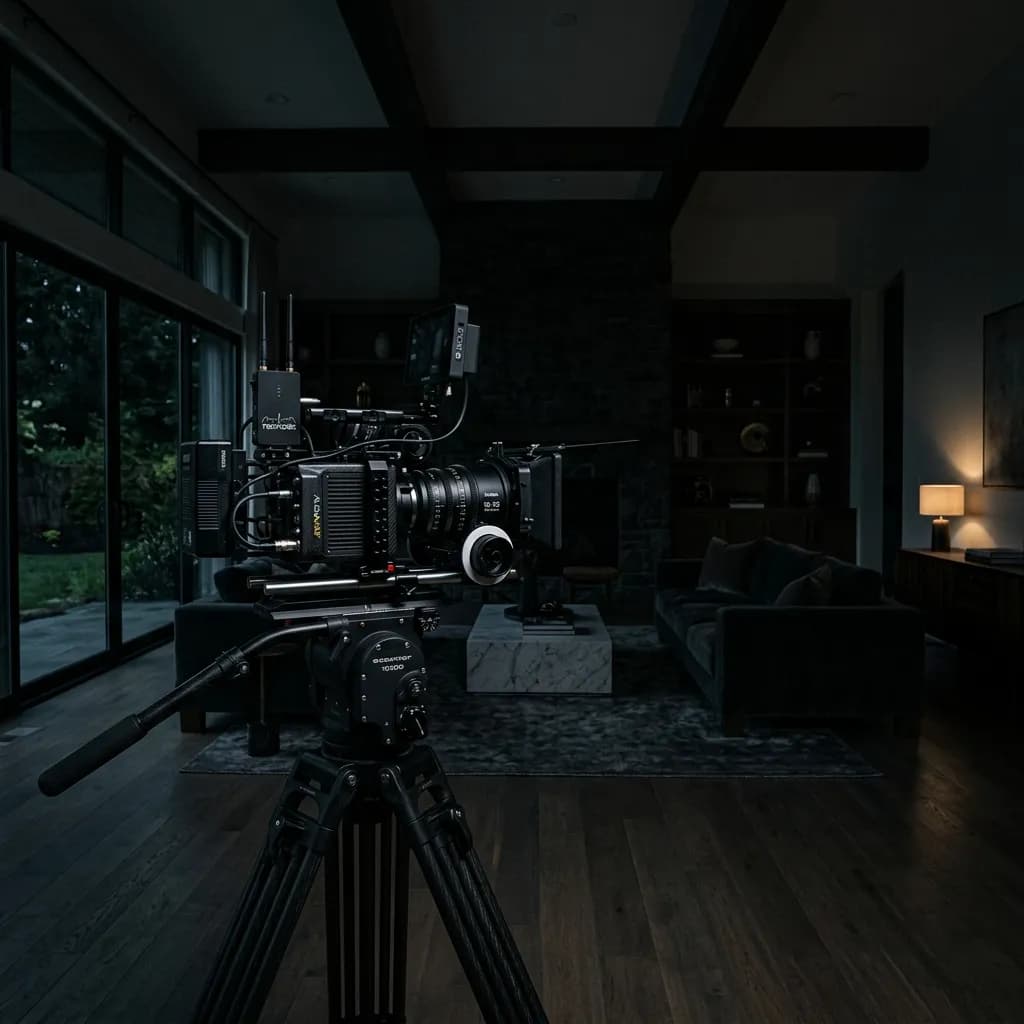
Cinematic videos require heavy cinema cameras (e.g. from RED, Arri or high-end Sony systems) mounted on calibrated, electronic gimbals or sliders. The combination of full-frame sensors and mass ensures the "floating", absolutely quiet tracking shots that you know from movies. Only this calm in the picture conveys the desired grandeur and exclusivity to the viewer.
Error 2: Wrong format for the wrong platform
A classic mistake in post-production is the 'one-size-fits-all' principle. A 3-minute video in 16:9 (landscape) is uploaded unchanged to all channels (website, YouTube, Instagram).
Why this fails:
The attention span on social media is under 3 seconds. A long landscape video that only fills a third of the screen on a vertically held smartphone will be immediately swiped away. You lose 80% of your organic reach.
The Professional Solution (Multi-Format Delivery):
FotoEstate produces real estate videos across multiple channels. You will receive a longer promotional video (16:9, 4K) for your website and your (optimally prepared) exposé. In addition, we edit dynamic 15- to 30-second teasers in 9:16 (vertical format), optimized for Instagram Reels, TikTok, and YouTube Shorts. Only those who deliver platform-specific content trigger the algorithms and generate viral reach.
Error 3: Boring Storytelling (The Room-to-Room Syndrome)
The video begins at the door. Then the hallway, then the kitchen, then the bathroom, then the bedroom. It is a pure documentation of the floor plans in moving images.
Why this fails: Documentation does not evoke emotions. If a video only shows where the doors are, it is boring and viewers switch off after 20 seconds.
The Professional Solution (Lifestyle Direction):
A cinematic video sells a vision. We rely on strong establishing shots (drone flights that capture the magnificence of the property). The editing follows the rhythm of the music. We do not show empty bathrooms, but film the lively, flowing water of the rain shower. We capture the play of light and shadow on the designer parquet. We stage the fireplace or the infinity pool as emotional highlights. It's about the details that evoke desire.
Error 4: Gray mush due to missing color grading
They are filming a breathtaking object, but in the finished video the white walls appear yellowish, the skin tones unnatural, and the grass pale.
Why this fails:
Professional cameras record in the so-called "log profile" (a very flat, gray image profile) to capture the maximum dynamic range between bright windows and dark corners of a room. If this raw material is exported without post-processing, it looks catastrophic.
The Professional Solution:
The secret of the cinematic look is color grading. Our colorists at FotoEstate manually adjust each individual clip (take). We balance the colors, rescue overexposed windows, and give the entire film a uniform, warm, and sophisticated look (the “Cinematic Teal & Orange” touch). This grading is what triggers in the viewer’s brain the feeling of a “high-end TV production.”
Error 5: The Audio Catastrophe (Inferior Music & Missing Sound Design)
George Lucas (Star Wars) once said: "Sound is 50% of the film experience." Many real estate videos are accompanied by free elevator music (corporate stock music). Often, any ambient background noise is missing.
Why this fails:
Cheap music makes even the most expensive penthouse seem cheap. A silent film (without real sounds) feels sterile and unnatural.
The Professional Solution:
We license hand-picked, emotional premium music (from classical to urban), precisely tailored to the target buyer. The editing is done beat-accurately (beat-syncing). Even more important: the sound design. When the drone flies over the forest, we mix in bird chirping and wind sounds. When the camera passes by the fireplace, the viewer hears the crackling. These subtle audio layers perfect the immersion.
Conclusion: Leave directing to the professionals
For premium brokers and property developers, the production of cinematic real estate videos is not a DIY project. A poorly made video burns advertising budget and harms brand positioning.
Put the visual staging of your most exclusive mandates in the hands of experts. FotoEstate offers B2B clients the full Hollywood workflow: From FPV drones to heavy-duty gimbals to color grading and sound design. Delight your owners, generate qualified leads, and sell emotions instead of floor plans.
Related articles
Explore Cinematic property videos
See what the service includes, which source material is useful and how a typical project starts.