How Real Estate Agents Can Profitably Use Virtual Home Staging
Discover the best strategies to gain more customers with virtual home staging.
The sale of a vacant property is one of the biggest challenges for real estate agents. Empty spaces not only appear cold and sterile in photos, but they also deprive the buyer of any reference point for the room size.
Paradoxically, the human eye perceives a completely unfurnished room as much smaller than it actually is. The prospective buyer stands in the room during the viewing (or looks at the brochure, which is why optimal use of 2D & 3D floor plans for real estate agents is essential) and asks anxiously: "Will my box spring bed even fit in here?"
In addition, the emotional component is missing. An empty shell does not evoke any longing for a 'home.' The solution is home staging – but the classic variant (physical staging) quickly reaches logistical and financial limits.
In this guide, you will learn why Virtual Home Staging (Digital Staging) is your most efficient lever to drastically shorten marketing times, stop viewing tourism, and confidently win exclusive listings in acquisition (farming).
1. Cost Control: The Unbeatable ROI of Digital Staging
Physical home staging has an undeniable value, but the business model is expensive for the real estate agent (or seller).
If you have a 120 sqm apartment physically staged, you have to rent furniture, pay a moving company, coordinate craftsmen for the setup, and insure the furniture for several months. The costs quickly explode to 4,000 to 8,000 euros. In addition, the sales launch is delayed by several weeks until the setup is complete.
The digital alternative:
Virtual home staging completely solves this cost-logistics dilemma.
The 3D artists at FotoEstate take the photo of the empty room and furnish it digitally. The process takes only a few days and costs only a fraction of real staging per room (image).
You massively save your marketing budget (higher return on investment), can start sales immediately after the photoshoot, and achieve exactly the same emotional 'wow effect' on the real estate portals.
2. A/B Testing in Marketing: One Room, Three Target Groups
In marketing, the rule is: Whoever tries to please everyone ends up convincing no one. Every buyer group has different aesthetic preferences.
A major disadvantage of physical staging is the absolute inflexibility. You have to choose one decorating style.
Targeting with Virtual Staging:
Digital staging allows you to perform highly precise A/B testing on ImmoScout24 and social media. You can have the same empty room rendered in different style worlds (style guides):
- Scandi-Chic (Light, Wood, Minimalist): Perfect for young couples and families.
- Industrial Loft (Dark Metal, Leather, Brick): Ideal for the high-earning DINK (Double Income No Kids).
- Classic Elegant (Velvet, Gold, Heavy Fabrics): For the more established family office or the best-ager generation.
You target your online ads precisely with the appropriate image for the respective target audience and thereby significantly increase your conversion rate (lead generation).
3. The "Virtual Renovation": Turning Scrap into Gold
The greatest enemy of the real estate agent is the renovation backlog. They are selling an inherited house from the 1970s. Dark wood paneling, floral wallpaper, rustic oak kitchen, and a bathroom in moss green.
If you publish these photos, you will only attract bargain hunters (flippers) who want to immediately push the price down by 30%. The typical family man scrolls on immediately because he fears the renovation costs and has no imagination.
The Solution: Selling Visions
We use the method of virtual renovation. We digitally gut the room. We (virtually) tear out the wooden ceiling, replace the old carpet with fine real wood parquet, paint the walls white, and install a modern kitchen island.
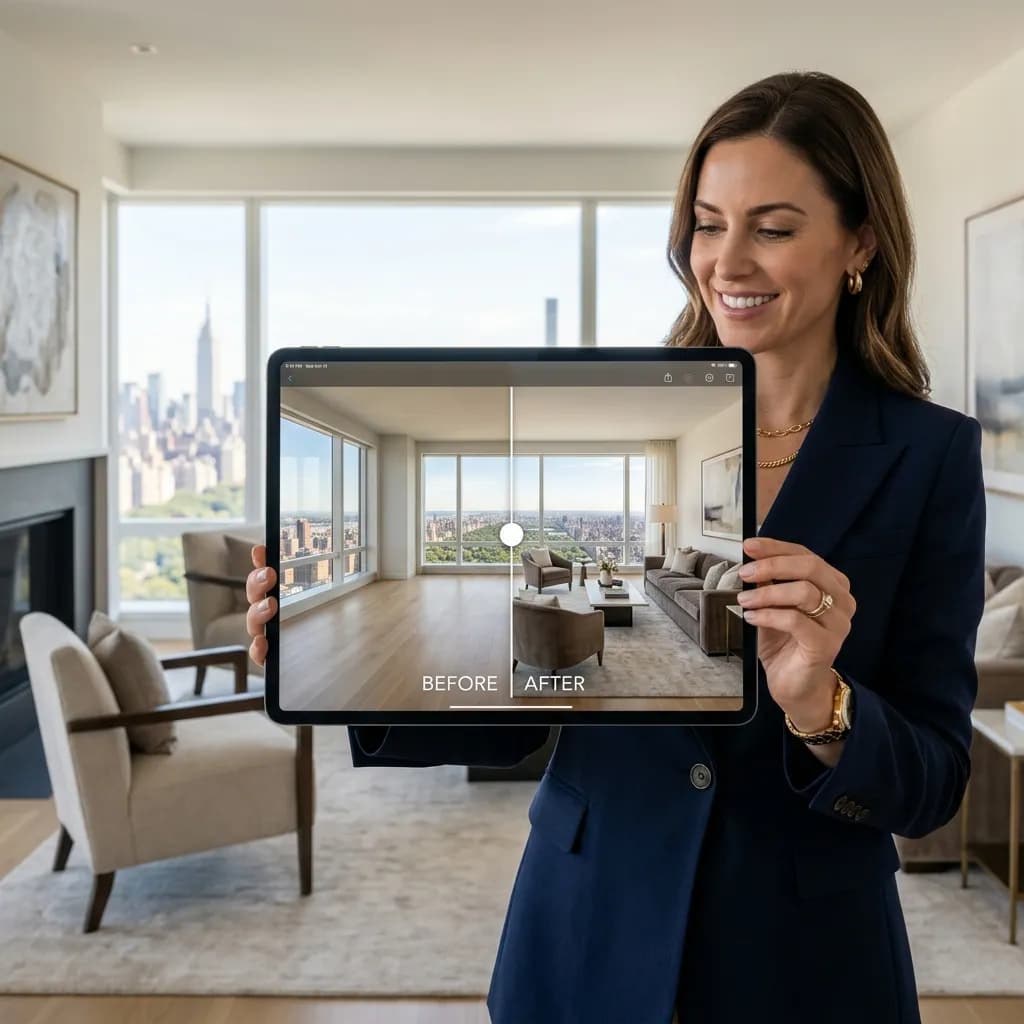
In the exposé, you place a 'before-and-after slider.' The buyer sees the current state, but he falls in love with the potential. You no longer sell him the old building substance, but the radiant vision of the future. This psychological lever is so strong that it nips price negotiations in the bud.
4. Acquisition Power: Dominate the Exclusive Mandate
The most powerful weapon of virtual staging unfolds not in sales, but in real estate purchasing (farming).
Imagine you are sitting at the owner's dining table and pitching for the exclusive contract. Your competitor said yesterday: "I take photos with my phone and put them on the internet."
Your Pitch:
"Mr. Owner, empty rooms look small and cold on portals. We do not leave the sales price to chance. My agency works with the 3D designers from FotoEstate. We will digitally furnish your empty rooms with high-end furniture, optimize the lighting, and present your house as if in a design magazine. This way, we attract exactly the buyers who are willing to pay your asking price."
This is tech leadership. The owner immediately notices that you are not just a mere door opener, but a professional marketing agency. This justifies your commission and secures you the coveted brokerage contract.
Conclusion: The Evolution of Real Estate Marketing
Anyone who wants to sell real estate in the modern attention economy must provide images that stop scrolling on the smartphone (thumb-stoppers).
Virtual home staging by FotoEstate offers you this visual brilliance without the financial and logistical risk of physically buying furniture. It helps you to enhance renovation properties, target your audience precisely, and effortlessly outshine your competition in acquiring sales mandates. Make digital staging your standard process and maximize your commission revenues.
Related articles
Explore Virtual home staging
See what the service includes, which source material is useful and how a typical project starts.