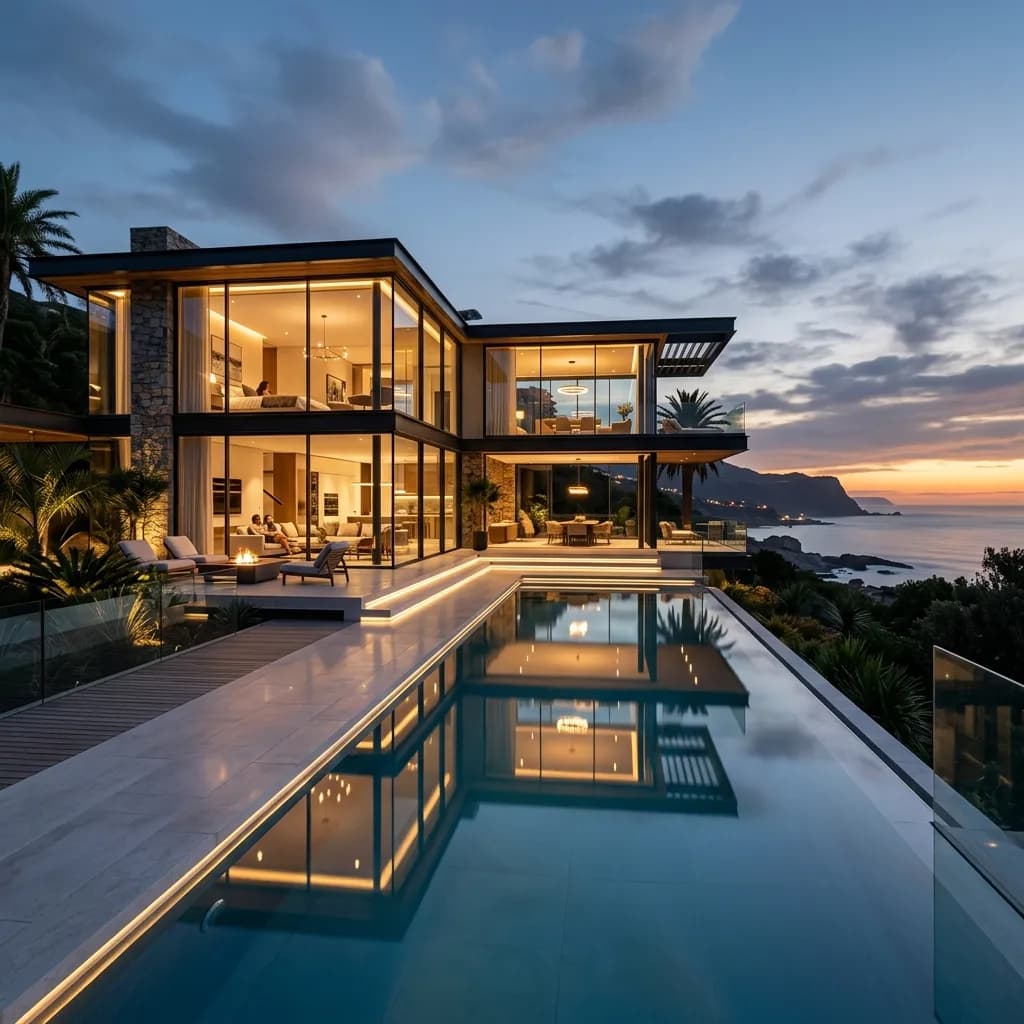
Selling before the first groundbreaking: The power of 3D real estate renderings
Photorealistic 3D renderings evoke emotions and build trust with investors and private buyers, even before the construction site exists.
In the property development and real estate project development business, there is an unrelenting mathematical truth: time is construction time interest. To satisfy banks for loan approval (mezzanine or debt capital), a strict pre-sale quota of 30 to 50 percent usually has to be achieved. The problem? At this stage, often there is nothing more than a construction pit – or an empty plot of land.
Selling condominiums or townhouses "off the plan" (off-plan) is the ultimate challenge in sales. Buyers and investors are expected to pay millions for a product they cannot enter or touch. This is precisely where traditional sales fail if they rely on two-dimensional CAD line drawings or simple architectural sketches. The solution for maximum pre-sale success is photorealistic 3D architectural visualizations (renderings). In this B2B guide, we show why renderings are not a marketing gimmick, but the most important lever for risk minimization in project business.
1. The Psychology of the Off-Plan Buyer
Why is it so difficult for people to buy an apartment based on a plan? The answer lies in cognitive overload. The human brain is visually driven. When a buyer sees a raw black-and-white plan (without prior sales-promoting floor plan optimization) of a 150-square-meter penthouse apartment, they lack three crucial emotional anchors:
1. Spaciousness: How large is the room really when furniture is in it?
2. Lighting: How does the afternoon sun fall through the floor-to-ceiling windows?
3. Materiality: How do the oiled oak parquet and the exposed concrete work in combination?
Renderings fill the gap: A high-end rendering instantly solves this psychological problem. The buyer sees no lines; he sees a finished home. He feels the warmth of the wood, sees the play of light and shadow on the kitchen island, and examines the texture of the living room couch. The rendering takes the exhausting "translation work" from plan to reality off the buyer and transforms skepticism into immediate desire.
2. Exterior Visualization: The Art of Embedding
The facade is the business card of the project. But an isolated 3D model of a house on a white background looks sterile and unrealistic.
Drone Integration (Photo Montage):
The premium class of exterior visualization is real environment embedding (compositing). At FotoEstate, we use high-resolution drone shots of the actual building site. The 3D model of the planned building is accurately calculated into this real photograph.
So the buyer does not only see the house, he sees how the building fits into the existing neighborhood, how close the forest really is, and what real panoramic view he can expect from the south-facing balcony on the 3rd floor. This transparency justifies the premium price, as the surroundings are visually proven to be a value driver.
3. Interior Renderings: Digital Home Staging for Every Target Group
Every project has a specific buyer group. A loft in Berlin-Mitte requires a completely different interior design than a family-friendly semi-detached house in the Munich outskirts.
Flexibility of virtual design: Unlike a physically built and furnished show apartment, 3D visualization offers absolute flexibility. We can adjust the digital furniture, textiles, and decorations precisely to the sinus milieus of your target audience.
- The Urban Loft: Dark steel elements, raw exposed concrete, minimalist Italian designer furniture, and a warm fireplace.
- The Family Idyll: Scandinavian wood design, bright pastel tones, fluffy rugs, and subtly visible children's toys.
Through target group-optimized digital staging, buyers immediately identify with the property. They do not just buy concrete, but the vision of their future lifestyle.
4. Technological Brilliance: PBR and Physical Light
What distinguishes a cheap rendering from the Far East from a high-end architectural visualization? The physical accuracy.
Materials (PBR):
We use PBR materials (Physically Based Rendering). This means that materials are not just painted with color, but receive real physical properties. Marble reflects light differently than brushed steel or matte velvet. A good rendering shows the minimal irregularities in the plaster and the reflection of the sun on the coffee machine.
Light Calculation (Global Illumination):
In addition, we import the real geo-data of your property into our 3D software. When we simulate a "sunrise rendering" on June 21 at 7:00 AM, the computer calculates the exact, physically correct angle of light incidence for this specific location. This attention to detail distinguishes sterile computer graphics from photorealistic artworks.
5. The Business Case: Renderings vs. Show Apartment
Let's talk about ROI (Return on Investment). The traditional way for many developers is the construction and costly furnishing of a physical model apartment.
Cost and time trap model apartment:
A show apartment often costs 20,000 to 50,000 euros in equipment (furniture, designer kitchen, lighting) and ties up capital, as this unit can only be sold at the very end (often at a discount for the "used" furniture).
Efficiency through 3D:
For a fraction of this budget, FotoEstate provides you with a complete, high-end 3D portfolio: multiple exterior views (day/night), drone embeddings, and a dozen interior renderings from all angles. You start marketing months before the excavator rolls in. The interest advantage from the accelerated placement rate and the immediate start of bank financing usually outweighs the costs of the renderings many times over.
Conclusion: Visualization is your best salesperson
In a competitive real estate market, the project with the strongest visual marketing wins. High-quality 3D real estate renderings are not a marketing expense, but a strategic investment in sales speed and risk minimization.
With FotoEstate as your B2B visualization partner, you turn abstract building plans into highly emotional real estate experiences. We provide you with the visual firepower you need to convince investors, meet pre-sales quotas ahead of schedule, and place your new construction projects at the maximum market price – long before the first groundbreaking.
Related articles
Explore Property rendering
See what the service includes, which source material is useful and how a typical project starts.