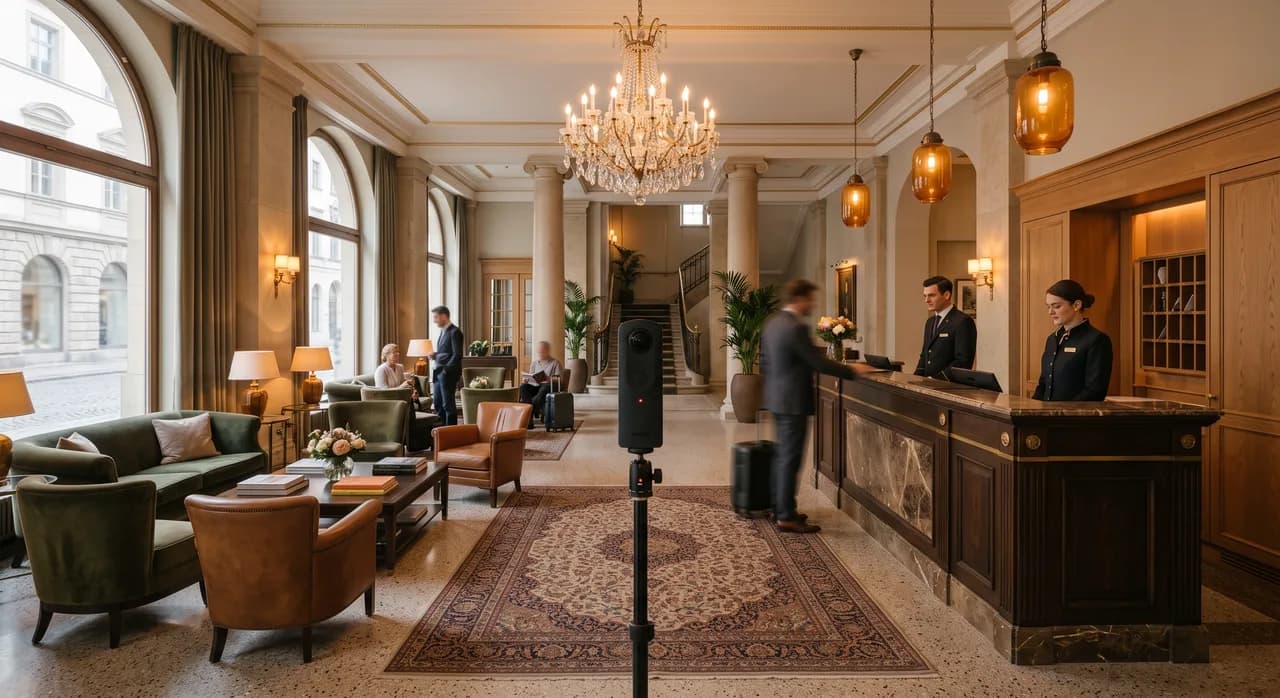
Wer als Hotelbetreiber zum ersten Mal über einen virtuellen Rundgang nachdenkt, stellt sich meist eine ganz praktische Frage: Muss wirklich jedes einzelne Zimmer gescannt werden, oder reicht ein repräsentativer Ausschnitt? Und wie lässt sich ein Scan-Projekt überhaupt organisieren, ohne den laufenden Betrieb, die Gästeprivatsphäre oder das Housekeeping durcheinanderzubringen? Diese Fragen sind berechtigt, denn ein Hotel ist kein leerstehendes Musterhaus, sondern ein Betrieb mit Belegung, Reinigungsplänen und sensiblen Bereichen. Der folgende Beitrag zeigt Schritt für Schritt, wie ein Hotel methodisch und praxistauglich virtuell begehbar gemacht wird – von der Kategorienauswahl über die Gemeinschaftsflächen bis zur Einbindung in Vertrieb und Buchungsprozess.
Warum nicht jedes Zimmer gescannt werden muss
Ein verbreitetes Missverständnis ist die Annahme, ein vollständiger virtueller Rundgang müsse jedes einzelne Zimmer eines Hotels abbilden. In der Praxis ist das weder notwendig noch sinnvoll. Gäste, die ein Hotelzimmer online betrachten, wollen nicht ein bestimmtes Zimmer mit der Nummer 214 sehen, sondern verstehen, was sie für ihre gebuchte Kategorie erwarten dürfen. Ein Standard-Doppelzimmer unterscheidet sich innerhalb derselben Kategorie meist nur in Details wie Ausblick oder Möblierungsvariante, nicht aber in Grundriss, Ausstattung oder Raumgefühl.
Daher orientiert sich die Planung eines virtuellen Rundgangs an der Zimmerkategorien-Matrix des Hotels: Standardzimmer, Comfort- oder Superior-Zimmer, Suiten, barrierefreie Zimmer, Familienzimmer und etwaige Sonderkategorien wie Zimmer mit Balkon oder Meerblick. Für jede dieser Kategorien wird ein repräsentatives, gut gepflegtes Musterzimmer ausgewählt und gescannt. Das reduziert den Aufwand erheblich, ohne die Aussagekraft für den Gast zu schmälern – im Gegenteil, die Auswahl kann sogar gezielter erfolgen, weil das am besten instand gehaltene und am hellsten fotografierte Zimmer jeder Kategorie gewählt wird.
Diese Kategorienlogik hat einen weiteren Vorteil: Sie lässt sich unmittelbar mit dem Property-Management-System und der Buchungsmaschine verknüpfen. Jede Zimmerkategorie im Buchungssystem kann direkt auf den passenden virtuellen Rundgang verweisen, sodass Gäste beim Auswählen einer Kategorie sofort sehen, wofür sie bezahlen. Das schafft Transparenz und reduziert Diskrepanzen zwischen Erwartung und Realität – eine der häufigsten Ursachen für negative Bewertungen im Hotelgewerbe.
Der Auswahlprozess: Welche Zimmer werden zum Muster
Bevor ein Scan-Termin überhaupt stattfindet, braucht es eine kurze Abstimmung zwischen Hotelleitung, Reservierung und dem Dienstleister für die 3D-Erfassung. Dabei wird zunächst die vollständige Kategorienliste durchgegangen und mit der Belegungsplanung abgeglichen: Welche Zimmer sind in den kommenden Tagen frei, gut gepflegt und repräsentativ für ihre Kategorie? Häufig bietet es sich an, ein frisch renoviertes oder kürzlich neu möbliertes Zimmer als Referenz zu wählen, sofern es den Standard der übrigen Zimmer dieser Kategorie widerspiegelt.
Wichtig ist dabei auch die Berücksichtigung von Varianten innerhalb einer Kategorie, etwa unterschiedliche Grundrisse durch Eckzimmer oder abweichende Fensterfronten. Wenn eine Kategorie intern in mehrere Grundrissvarianten zerfällt, kann es sinnvoll sein, zwei oder drei Musterzimmer statt nur eines zu scannen. Die Entscheidung darüber trifft im Idealfall das Hotel gemeinsam mit dem Scan-Team, da die Betriebsleitung am besten einschätzen kann, wo tatsächliche Unterschiede bestehen und wo es sich lediglich um kosmetische Abweichungen handelt.
Am Ende dieses Auswahlprozesses steht ein klarer Aufnahmeplan: eine Liste von Zimmernummern, zugeordnet zu Kategorien, mit einem realistischen Zeitfenster für die Erfassung. Dieser Plan wird an die Rezeption und das Housekeeping kommuniziert, damit die betreffenden Zimmer am Aufnahmetag nicht belegt oder gerade erst freigegeben sind. Ein durchdachter Auswahlprozess spart im weiteren Projektverlauf viel Zeit, weil Nacharbeiten oder spontane Umplanungen entfallen.
Gästeschutz und Betrieb: Scannen im laufenden Hotelalltag
Ein Hotel steht selten komplett leer, und genau das unterscheidet ein Scan-Projekt im Hospitality-Bereich von der Erfassung eines unbewohnten Neubauobjekts. Damit der laufende Betrieb nicht gestört wird und die Privatsphäre der Gäste jederzeit gewahrt bleibt, gelten für Hotelscans einige feste Grundregeln. Zunächst werden ausschließlich Zimmer erfasst, die zum Aufnahmezeitpunkt nicht belegt sind – idealerweise Zimmer, die bereits durch das Housekeeping fertig gereinigt und für den nächsten Check-in vorbereitet wurden. So entsteht kein Zielkonflikt zwischen Gästeprivatsphäre und Aufnahmeplan.
Darüber hinaus werden persönliche Gegenstände von Gästen grundsätzlich nicht mit erfasst. Da für die Musterzimmer ohnehin unbelegte, vorbereitete Zimmer gewählt werden, stellt sich diese Frage in der Praxis selten – dennoch gehört die Kontrolle vor dem Scan zum Standardablauf: Ein kurzer Rundgang durch das Zimmer, bevor die Aufnahme beginnt, stellt sicher, dass keine Kofferreste, Kleidungsstücke oder Dokumente im Bild sind. Bei laufendem Betrieb wird zudem auf Fluren und in Aufzugsbereichen auf Gäste geachtet, die während der Aufnahme nicht ungewollt erfasst werden sollen; die Aufnahmezeiten für öffentliche Bereiche werden deshalb häufig in besucherarme Tageszeiten gelegt, etwa am frühen Vormittag oder späten Nachmittag zwischen den Check-out- und Check-in-Wellen.
Auch das Personal wird in die Planung einbezogen. Housekeeping-Teams erhalten eine kurze Vorabinformation, damit sie wissen, welche Zimmer für den Aufnahmetag reserviert bleiben und nicht zwischenzeitlich neu belegt werden. Die Rezeption wiederum kennt den Zeitplan für öffentliche Bereiche, damit Gästeanfragen an der Lobby während der Aufnahme koordiniert beantwortet werden können. Diese enge Abstimmung mit dem Betrieb ist letztlich der Unterschied zwischen einem Scan-Projekt, das reibungslos abläuft, und einem, das Unruhe in den Tagesbetrieb bringt.
Gemeinschaftsflächen als eigenständige Priorität
Während Zimmerkategorien den größten Teil der buchbaren Fläche eines Hotels ausmachen, sind es oft die Gemeinschaftsbereiche, die über den ersten Eindruck und damit über die Buchungsentscheidung mitentscheiden. Lobby, Restaurant, Bar, Spa- und Wellnessbereich sowie gegebenenfalls Pool und Außenanlagen verdienen deshalb eine eigenständige Planung innerhalb des Scan-Projekts, unabhängig von der Zimmererfassung.
Die Lobby ist in aller Regel der erste Raum, den ein virtueller Rundgang zeigt, weil sie auch im echten Aufenthalt der erste Eindruck ist. Hier zählt besonders die Großzügigkeit der Rauminszenierung: Deckenhöhen, Lichtstimmung und die Anordnung von Empfangstresen und Sitzbereichen sollten im Rundgang so erfahrbar sein wie beim Betreten des Gebäudes. Ähnliches gilt für Restaurant und Bar, wo neben der Raumwirkung auch die Sitzplatzkapazität und die Nähe zu Fenstern oder Terrassen für viele Gäste kaufentscheidend ist.
Der Spa- und Wellnessbereich verdient besondere Sorgfalt, da hier sowohl räumliche Großzügigkeit als auch Diskretion vermittelt werden müssen. Sauna-, Ruhe- und Massagebereiche werden grundsätzlich außerhalb der Nutzungszeiten oder in eigens dafür reservierten Zeitfenstern gescannt, um jede Überschneidung mit Gästen auszuschließen. Bei Pool- und Außenbereichen wiederum spielt die Tageszeit der Aufnahme eine wichtige Rolle für die Lichtstimmung – ein sonniger Vormittag zeigt eine Poollandschaft oft deutlich einladender als eine schattige Nachmittagsstunde. Diese Bereiche werden deshalb bewusst getrennt vom Zimmer-Scan terminiert und häufig an einem eigenen Aufnahmetag mit optimalen Lichtbedingungen erfasst.
Eventflächen und Konferenzräume: der oft unterschätzte Bereich
Neben dem klassischen Freizeit- und Individualgast ist für viele Hotels das Tagungs- und Veranstaltungsgeschäft – im Fachjargon MICE für Meetings, Incentives, Conventions und Events – ein wirtschaftlich mindestens ebenso bedeutsamer Bereich. Genau hier zeigt sich einer der größten praktischen Vorteile eines virtuellen Rundgangs, denn Tagungsplaner und Event-Verantwortliche treffen ihre Standortentscheidung oft, ohne das Haus vorher persönlich besichtigt zu haben.
Für Konferenz- und Veranstaltungsräume gelten deshalb eigene Anforderungen an die Aufnahme. Wichtig ist zunächst, dass die Räume in einer neutralen, aber realistischen Bestuhlungsvariante gezeigt werden – etwa als Reihenbestuhlung für Vorträge oder als U-Form für Workshops – da Planer sich anhand dieser Referenz die Kapazität für ihre eigene Veranstaltung vorstellen können. Viele Hotels lassen deshalb ergänzend zusätzliche Aufnahmen in einer zweiten Bestuhlungsvariante anfertigen, um die Flexibilität der Räume zu demonstrieren.
Besonders wertvoll wird der Rundgang durch Eventflächen, wenn er mit Maßangaben, Kapazitätsinformationen und technischer Ausstattung verknüpft wird – dazu später mehr im Abschnitt zu Info-Tags. Ein Tagungsplaner, der in wenigen Minuten virtuell durch den großen Ballsaal, zwei kleinere Breakout-Räume und die dazugehörige Foyer-Fläche für den Empfang gehen kann, gewinnt einen deutlich verlässlicheren Eindruck als durch reine Grundrisspläne und Fotos. Da Entscheidungen im Firmenkunden- und Veranstaltungsgeschäft häufig von mehreren Personen gemeinsam getroffen werden, die selten gleichzeitig vor Ort sein können, wird der virtuelle Rundgang hier oft zum zentralen internen Abstimmungswerkzeug – er kann per Link geteilt und in Ruhe von allen Beteiligten geprüft werden.
Integration von Buchungslinks und Informations-Tags
Ein virtueller Rundgang entfaltet seinen vollen Nutzen erst, wenn er nicht als isolierte Anwendung neben der Website steht, sondern aktiv in den Buchungsprozess eingebunden wird. Dafür werden innerhalb des Rundgangs interaktive Info-Tags platziert – kleine anklickbare Markierungen direkt im virtuellen Raum, die zusätzliche Informationen liefern, ohne den Rundgang zu unterbrechen.
In Zimmerkategorien können solche Tags etwa Ausstattungsdetails wie Bettgröße, Badezimmerausstattung oder verfügbare Zusatzleistungen anzeigen, während gleichzeitig ein direkter Link zur Buchungsmaske für genau diese Kategorie hinterlegt wird. Der Gast muss also nicht mehr zwischen virtuellem Rundgang und Buchungsseite hin und her wechseln, sondern kann die Buchung unmittelbar aus dem Rundgang heraus anstoßen. In Eventräumen wiederum liefern Info-Tags typischerweise Kapazitätsangaben für verschiedene Bestuhlungsvarianten, Raummaße sowie einen Kontakt- oder Anfragelink an das Veranstaltungsverkaufsteam.
Auch für Gemeinschaftsbereiche lassen sich Tags sinnvoll einsetzen, etwa um auf Öffnungszeiten des Spas, die Speisekarte des Restaurants oder saisonale Angebote hinzuweisen. Diese Verknüpfung von Raumerlebnis und konkreter Handlungsmöglichkeit ist der entscheidende Unterschied zwischen einem virtuellen Rundgang als reinem Marketing-Schaufenster und einem virtuellen Rundgang als aktivem Vertriebsinstrument. Je nahtloser der Übergang vom Betrachten zum Buchen gestaltet ist, desto eher wird aus Interesse tatsächlich eine Reservierung.
Nutzung über die Leisure-Buchung hinaus
Ein virtueller Rundgang, der für ein Hotel erstellt wird, sollte von Anfang an so gedacht werden, dass er in mehreren Vertriebskanälen gleichzeitig Wirkung entfaltet – nicht nur auf der eigenen Buchungsseite für Individualreisende. Für den Veranstaltungsverkauf lässt sich derselbe Rundgang beispielsweise in Angebotsunterlagen einbetten, die das Sales-Team an Firmenkunden verschickt, sodass der Rundgang Teil des Angebotsprozesses wird und nicht nur der allgemeinen Website-Präsenz dient.
Auch für Reiseveranstalter, Buchungsplattformen und Kooperationspartner kann derselbe Rundgang eingebunden werden, sofern die technische Anbindung dies zulässt – ein einmal erstelltes Raumerlebnis lässt sich so mehrfach verwerten, ohne für jeden Kanal einen eigenen Inhalt produzieren zu müssen. Für die Öffentlichkeitsarbeit und den Vertrieb an Reisebüros bietet sich zudem an, einzelne Ausschnitte des Rundgangs als kurze Clips oder Standbilder für Präsentationen und Broschüren weiterzuverwenden.
Gerade für Häuser mit hohem Tagungsanteil lohnt sich zusätzlich eine gesonderte Landingpage, die ausschließlich die Eventflächen des Hotels bündelt und getrennt von der klassischen Zimmerpräsentation beworben wird. So sprechen Hotels sowohl den klassischen Urlaubsgast als auch den Tagungsplaner mit einem jeweils passgenauen Einstiegspunkt an, ohne dass sich beide Zielgruppen gegenseitig im Weg stehen.
Typischer Ablauf und Abstimmung mit dem Hotelbetrieb
In der Praxis lässt sich ein Hotel-Scan-Projekt in drei Phasen gliedern: Vorbereitung, Aufnahme und Nachbearbeitung mit Integration. Die Vorbereitungsphase umfasst die Abstimmung der Zimmerkategorien-Liste, die Terminplanung für Zimmer und Gemeinschaftsflächen sowie die interne Kommunikation an Housekeeping und Rezeption. Diese Phase dauert je nach Hotelgröße und internem Abstimmungsaufwand meist wenige Tage bis zu zwei Wochen.
Die eigentliche Aufnahmephase ist für ein mittelgroßes Hotel mit sechs bis zehn Zimmerkategorien und den üblichen Gemeinschaftsflächen häufig innerhalb eines bis zwei Aufnahmetage zu bewältigen, wobei Eventflächen mit mehreren Bestuhlungsvarianten oder besonders große Spa-Bereiche zusätzliche Zeit beanspruchen können. Größere Häuser mit ausgedehntem Tagungsbereich oder mehreren Gebäudeteilen planen entsprechend zusätzliche Tage ein. Wichtig für einen reibungslosen Ablauf ist ein fester Ansprechpartner auf Hotelseite, meist aus der Direktion, dem Rooms Division Management oder dem Veranstaltungsverkauf, der am Aufnahmetag kurzfristige Absprachen treffen kann, etwa wenn sich ein ursprünglich vorgesehenes Zimmer doch als belegt herausstellt.
Nach der Aufnahme folgt die Nachbearbeitungsphase, in der die einzelnen Raumaufnahmen zu einem zusammenhängenden Rundgang verknüpft, mit Info-Tags versehen und an die Buchungssysteme angebunden werden. Auch hier ist eine kurze Abstimmungsrunde mit dem Hotel sinnvoll, um Beschriftungen, verlinkte Kategorien und Kontaktangaben inhaltlich zu prüfen, bevor der Rundgang live geschaltet wird. Insgesamt lässt sich ein solches Projekt für ein durchschnittliches Hotel häufig innerhalb von drei bis fünf Wochen von der ersten Abstimmung bis zur Veröffentlichung realisieren, wobei Größe und Komplexität des Hauses die tatsächliche Dauer im Einzelfall verschieben können.
Fazit
Ein Hotel virtuell begehbar zu machen ist kein Alles-oder-nichts-Projekt, das jedes Zimmer bis ins letzte Detail erfassen muss, sondern eine strukturierte Aufgabe, die auf einer klugen Auswahl repräsentativer Zimmerkategorien, einer sorgfältigen Rücksicht auf laufenden Betrieb und Gästeprivatsphäre sowie einer eigenständigen Priorisierung von Gemeinschafts- und Eventflächen beruht. Wer die Kategorienlogik konsequent mit dem Buchungssystem verknüpft, Info-Tags gezielt für Zusatzinformationen und direkte Handlungsaufforderungen einsetzt und den Rundgang von Anfang an sowohl für Individualgäste als auch für den Tagungs- und Veranstaltungsvertrieb mitdenkt, erhält ein Werkzeug, das weit über eine hübsche Website-Ergänzung hinausgeht. Richtig geplant, wird der virtuelle Rundgang zu einem festen Bestandteil des Vertriebsprozesses – vom ersten Interesse eines Urlaubsgastes bis zur Angebotsprüfung eines Tagungsplaners – und lässt sich mit überschaubarem organisatorischem Aufwand in den bestehenden Hotelbetrieb integrieren.