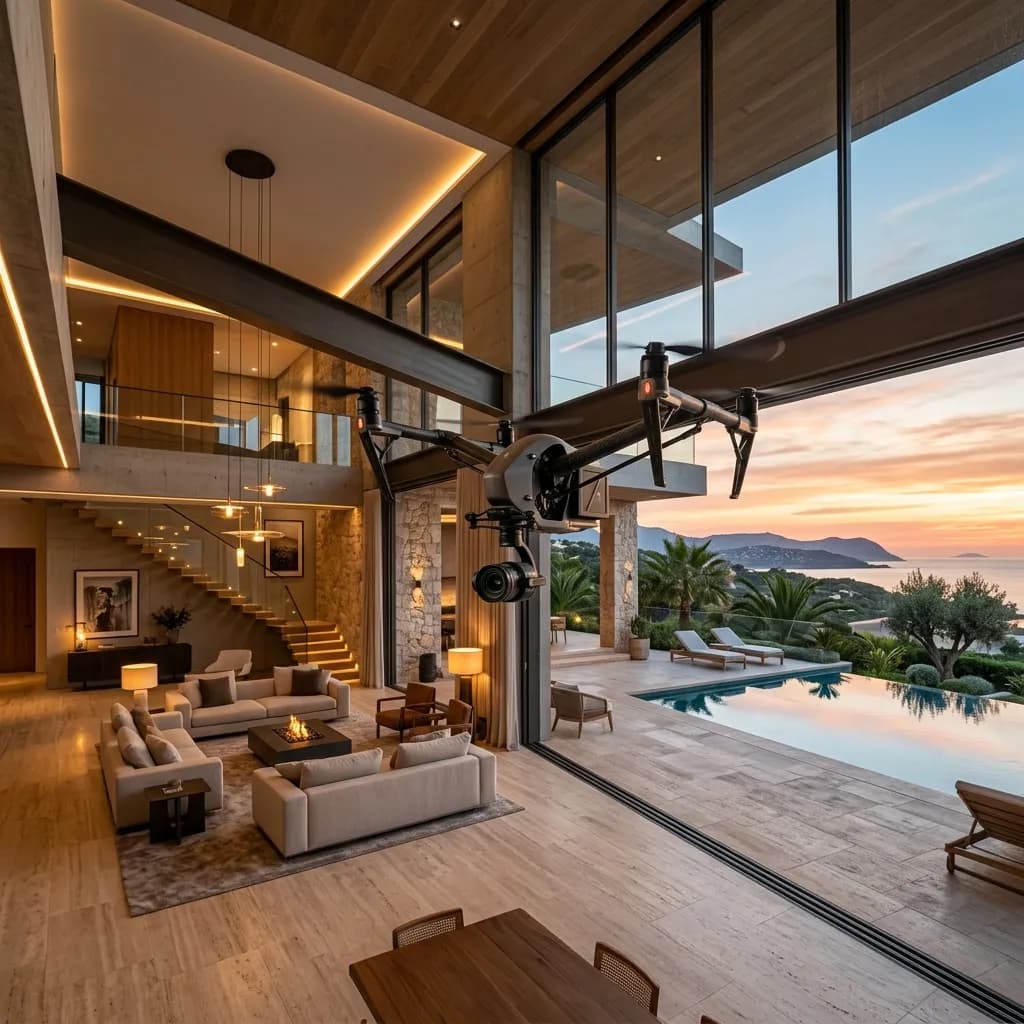
The most important trends in cinematic real estate videos in 2026
Which new technologies and developments in cinematic real estate videos are now changing the market.
In the high-end real estate sector, a radical change has taken place. The attention span of investors and wealthy buyers has decreased extremely due to social media. A classic real estate video – often no more than a sequence of individual photos set to bland royalty-free elevator music – at best elicits a yawn today, at worst it harms the broker's brand perception.
The year 2026 belongs to cinematic real estate videos. We are not talking about shaky smartphone footage here, but Hollywood standard: 10-bit color grading, 4K/8K resolution, electronic gimbal stabilization, and real cinema cameras (like Sony Cinema Line or RED). In this B2B guide, we show luxury real estate agents, developers, and project developers which four extreme video trends are currently dominating the market and how FotoEstate uses them to trigger emotions and maximize sales prices.
Trend 1: FPV Drones (The One-Take through the Window)
Classic drone shots (flying slowly over the roof from 100 meters high) are an absolute standard in 2026 and no longer impress anyone. The new currency for absolute attention (Attention) is called FPV (First-Person-View).
What is FPV in the real estate sector?
The pilot controls a small, agile special drone (Cinewhoop) through video goggles from the first-person perspective. These drones have propeller guards and can be safely flown through narrow indoor spaces.
The cinematic effect:
The video begins with a rapid dive along the facade, the drone brakes abruptly, flies gently through the slightly open living room window, hovers elegantly over the dining table, glides through the hallway, and flies back out into the garden through the patio door – all in a single, uncut one-take.
This incredible spatial dynamics immediately captivates the viewer on the screen. It creates a feeling of flow that is physically impossible to reproduce with conventional cameras on the ground.
Trend 2: Lifestyle & Storytelling (Sell the dream, not the square meters)
An empty house, no matter how luxuriously it is built, rarely evokes deep emotions. Premium buyers are not looking for four walls and a roof – they are looking for an upgrade to their lifestyle.
From Object to Lifestyle Video: In 2026, for developers and luxury real estate agents, we no longer primarily film the architecture; we film stories. We integrate extras (actors / models).
- The video does not start with the facade, but with a Porsche rolling onto the driveway.
- An elegantly dressed couple enters the foyer.
- The focus is on the espresso flowing from the portafilter machine in the custom kitchen as the morning sun breaks through the panoramic windows.
- A child jumps in slow motion (120 FPS) into the infinity pool.
We sell the status, the feeling of arrival, and the luxury of everyday life. The property now functions "only" as a breathtaking Hollywood backdrop for this perfect way of life.
Trend 3: Social-First (The 9:16 Vertical Revolution)
The reality of B2B and B2C marketing in 2026: Over 80% of video traffic happens on the smartphone. Platforms like Instagram Reels, TikTok, YouTube Shorts, and increasingly LinkedIn algorithmically push only the vertical 9:16 format.
The mistake of many agencies:
A classic 16:9 cinema video is simply cropped on the left and right in the editing program to play it on the phone. The result is catastrophic: spaces appear claustrophobically tight, the architecture is mutilated.
The 2026 Trend:
We rig our heavy cinema cameras vertically (portrait) on the gimbal systems from the start. We compose the image natively for the smartphone screen. Floors and ceilings (vertical architecture like galleries or high window fronts) are spectacularly showcased. When an investor scrolls through LinkedIn at the airport, our real estate video fills their entire screen. Maximum immersion, maximum click-through rate.
Trend 4: Sound Design (50% of the experience)
George Lucas once said: "Sound is half the experience in seeing a film." Exactly this principle reached the real estate industry in 2026.
An excellent image without the appropriate sound design feels sterile. Our editors at FotoEstate spend hours perfecting the auditory layer (foley art):
- Sharpening perception: When the camera pans over the fireplace, the viewer hears a subtle crackling.
- Spatiality: As the camera approaches the garden, the birdsong and the splashing of the pool gradually fade in.
- Music synchronization: Every hard cut in the video happens exactly on the beat (the bass drop) of the epic soundtrack.
This auditory feedback triggers the buyer's subconscious extremely strongly and builds an emotional connection to the property before even the first word is spoken.
Conclusion: Your most powerful tool for purchasing acquisition
Cinematic real estate videos are more expensive to produce than a few HDR photos (even though professional image editing for photos has already been proven to increase the property price). But smart real estate agents have long stopped seeing these videos as mere sales costs for this one house.
A cinematic video is the strongest marketing campaign for your real estate agency itself.
When you post such a Hollywood reel on Instagram, you not only generate leads for the current property. You also attract the attention of other wealthy owners in the area. A seller of a 3-million-euro villa thinks to themselves: "Wow, that's exactly how my house should be presented too."
You use the video of the current property to acquire the next, even larger exclusive mandate. Anyone who wants to be perceived as a market leader in 2026 must necessarily communicate like a market leader. FotoEstate is your production partner for this cinematic premium league.
Related articles
Explore Cinematic property videos
See what the service includes, which source material is useful and how a typical project starts.